Place Sensors Anywhere
Commercial kitchens have flat surfaces. Your basement has pipes, joists, and chaos. That's why we built the GripMount and TiltMount.
Homes Aren't Commercial Kitchens
When we started deploying RodentRadar in commercial kitchens, placement was simple. Flat floors under prep tables, behind coolers, along walls. Plenty of surfaces to set a sensor on.
Then homeowners started asking for help. And we quickly realized: basements, crawlspaces, and utility areas don't have flat surfaces. They have pipes, joists, wiring, and ductwork. The rodents love it up there. Our sensors needed to get up there too.
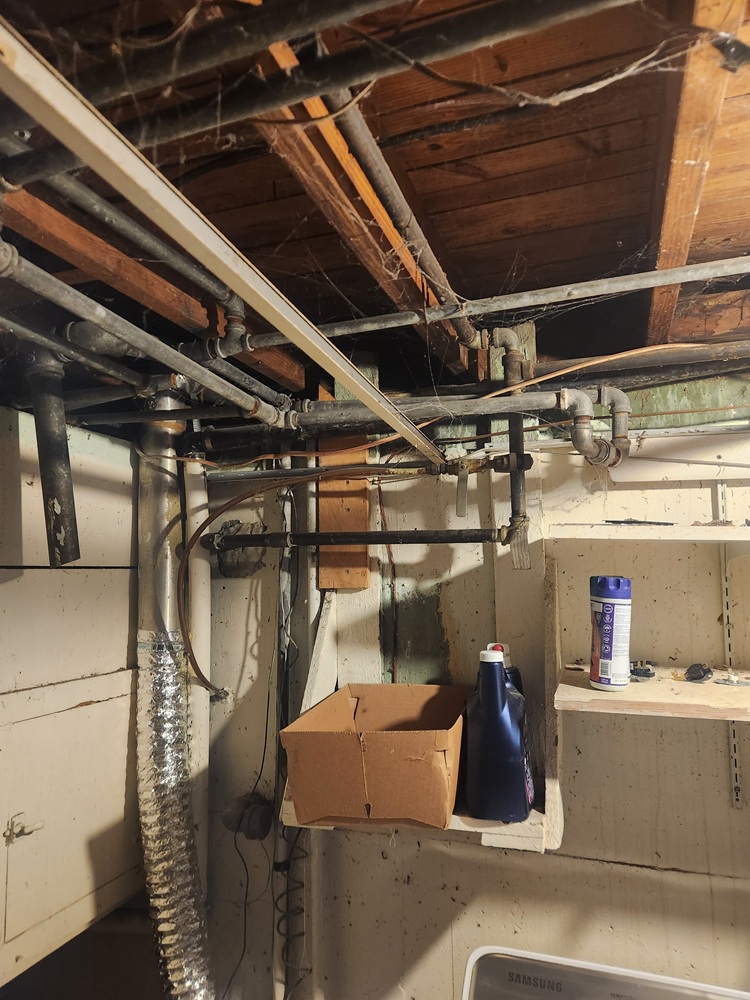
A typical basement under the kitchen. Pipes, joists, wiring — and somewhere in there, a rodent highway.
What You'll Need
Your kit includes sensors, GripMounts for wrapping around pipes, TiltMounts for angling on surfaces or hanging from joists, and drywall screws for joist mounting. You'll just need a Phillips screwdriver and a short piece of wire to secure the GripMount arms.
No special tools. No drilling into pipes. Five minutes per sensor, tops.
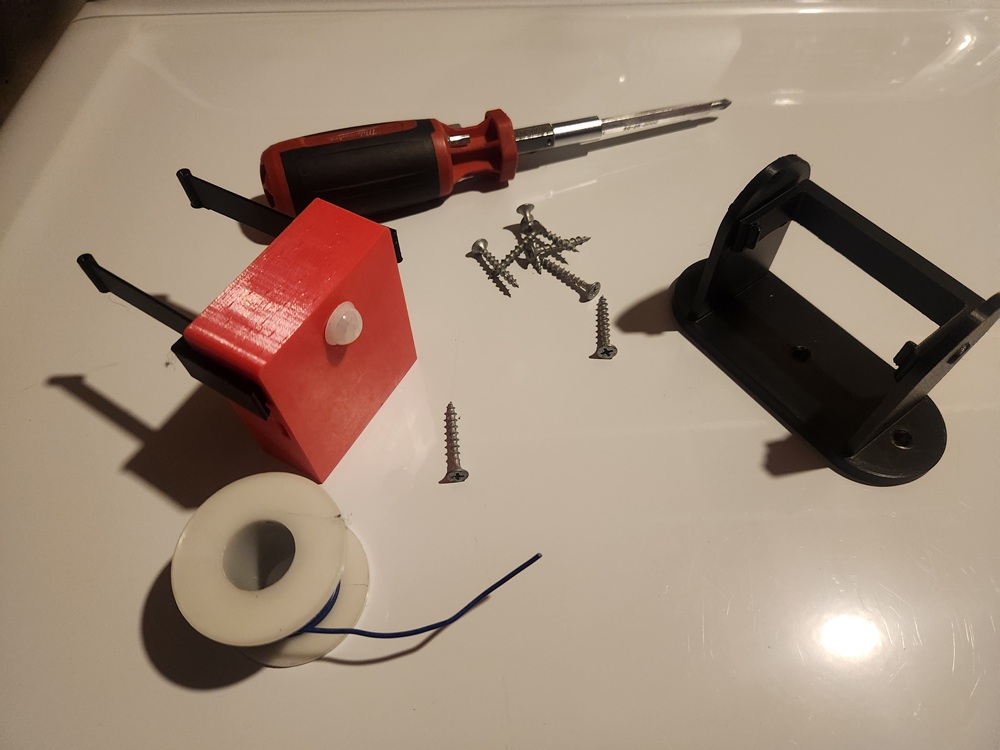
The basics: sensor, GripMount, TiltMount, drywall screws, wire, and a screwdriver.
Two Mounts. Every Situation Covered.
Each mount is 3D-printed and designed specifically for the RodentRadar sensor.
GripMount
Flexible arms wrap around pipes of any size — drains, water lines, gas pipes. Notches on the sides grab the sensor securely. Wire ties the arms together around the pipe. Done.
TiltMount
Flat base with a pivot that lets you angle the sensor up or down. Set it on the floor to look up at the ceiling. Or flip it over, screw it into a joist, and look down at everything below.
GripMount — Get Sensors on Any Pipe
Rodents follow pipes. It's how they navigate between floors, move along walls, and find their way into your living space. The GripMount puts your sensor right on their highway — wrapped around the pipe, looking straight at the action.
Flexible Arms That Grip
The GripMount has two flexible arms with notches that grab the sides of the sensor. Squeeze the arms slightly to flex them around the pipe, then secure with a short piece of wire connecting the two arms. It holds firm but comes off easily if you need to reposition.
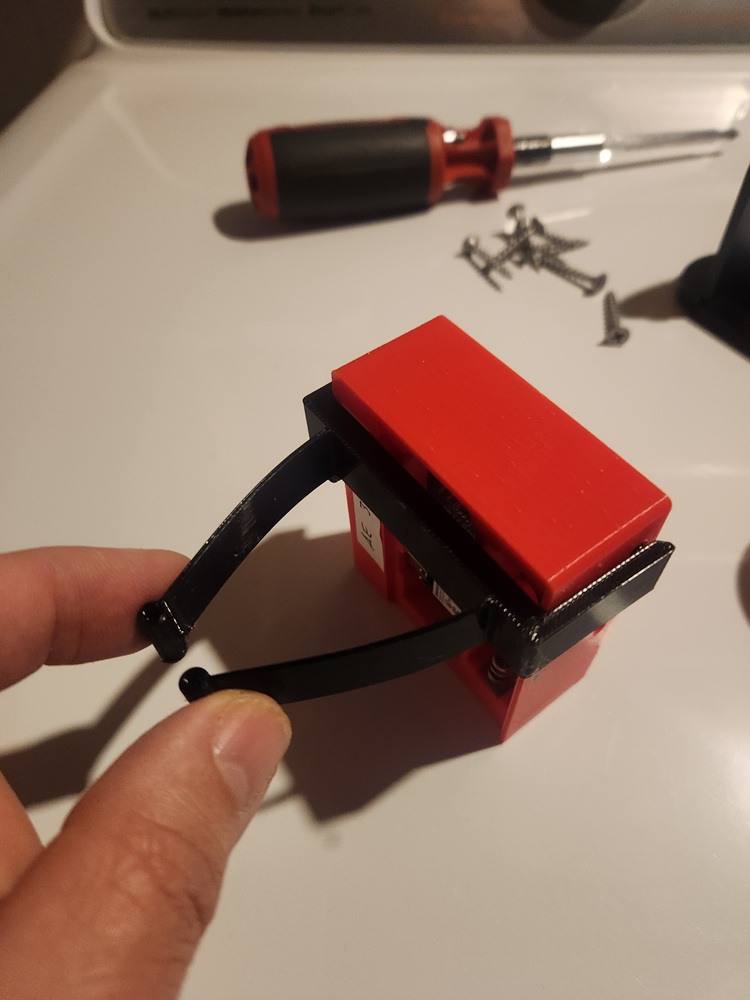
Flexible arms squeeze to fit around different pipe sizes.
Wraps Around the Pipe
The arms wrap around the pipe with the sensor facing outward. Works on 1.5-inch drain lines, 2-inch PVC, copper water lines — whatever's in your basement. The sensor sits snug against the pipe, pointed right where you need it.
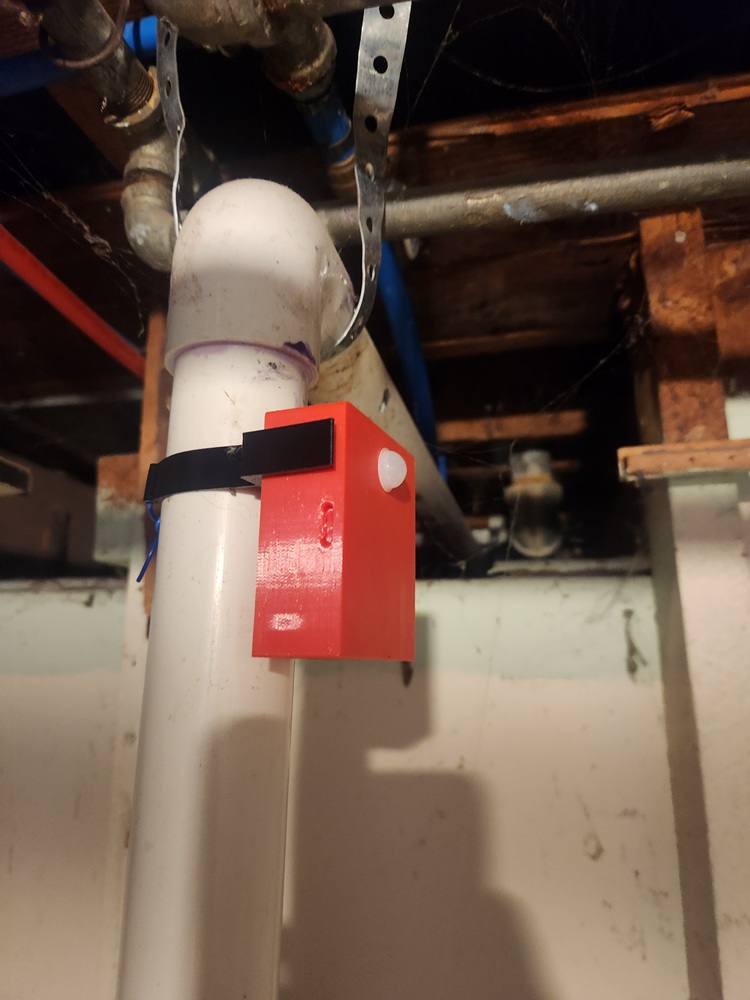
Mounted on a 2" PVC drain pipe — sensor faces out, arms wrap around.
Secured With Wire
A short piece of wire connects the two arms behind the pipe, keeping everything locked in place. Simple, solid, and easy to undo if you need to move the sensor to a new spot.
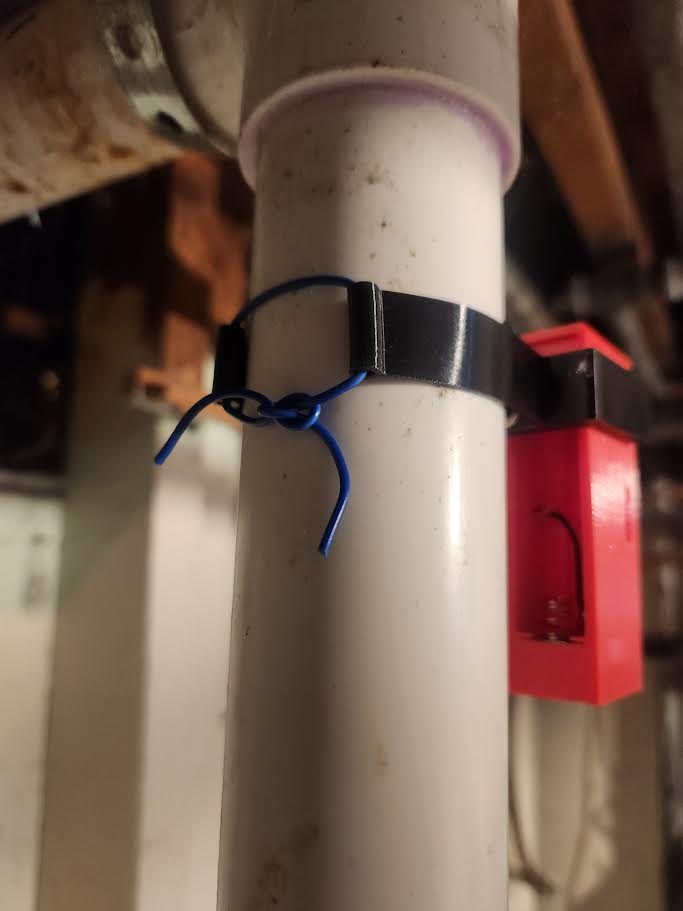
Wire ties the arms together behind the pipe. Secure but easy to reposition.
The Result: A Sensor With a View
From up on the pipe, the sensor has a clear line of sight across the area below — exactly where rodents travel. This is the kind of coverage you can't get from a sensor sitting on the floor.
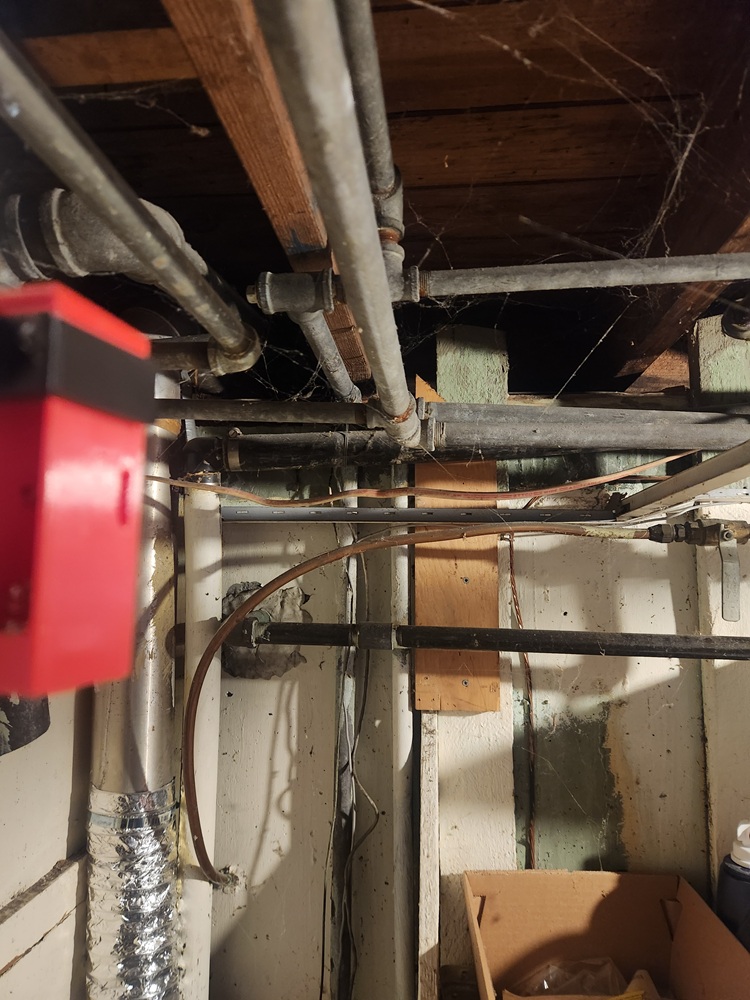
What the sensor sees from its perch on the pipe — clear view of the pipes and travel routes below.
TiltMount — Aim Up, Aim Down, Hang From a Joist
Sometimes you need a sensor on the floor but pointed at the ceiling. Sometimes you need it overhead, looking down. The TiltMount does both — a flat base with a pivot that angles the sensor wherever you need it, plus screw holes for mounting upside down under joists.
Floor Mount — Angled Up
Set the TiltMount on the floor and rotate the sensor upward to watch pipes coming down from the ceiling, wall penetrations, or joist areas above. Perfect for spots where you suspect rodents are traveling overhead but you can't easily reach the ceiling.
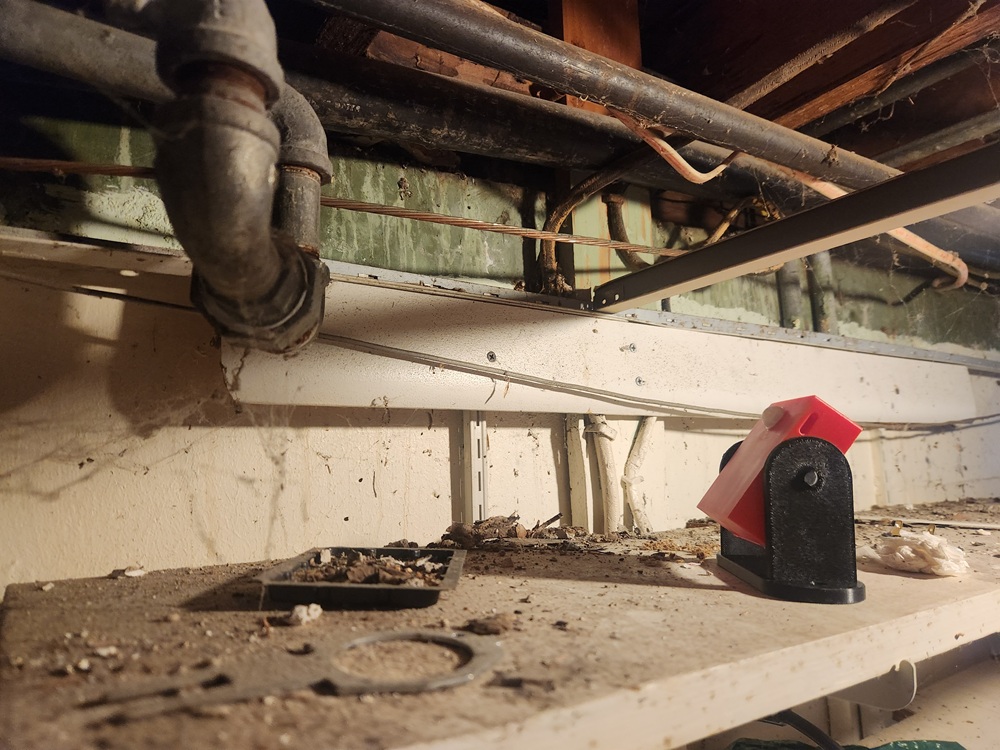
Sensor angled up from the floor, watching the pipes and joists above.
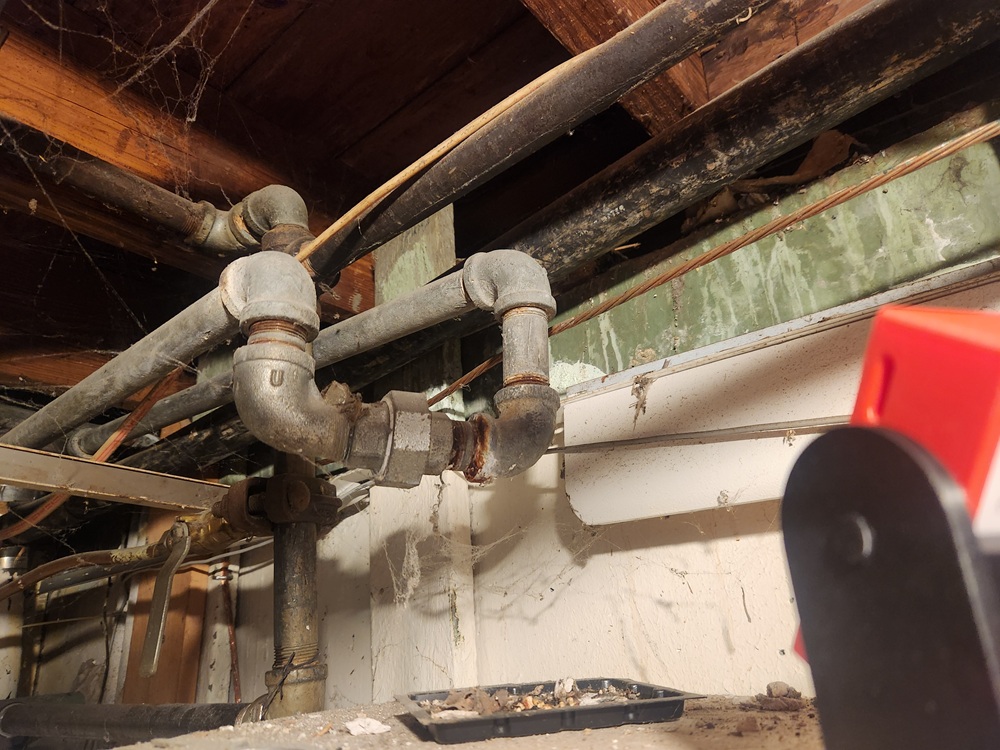
The coverage area — sensor catches movement across the overhead pipes.
Joist Mount — Hanging Upside Down
Flip the TiltMount over and you'll see three screw holes in the base. One drywall screw into a joist and it's up. Rotate the sensor to look down at whatever's below — pipes, ledges, wherever you think they're traveling. This is the overhead view you can't get any other way.
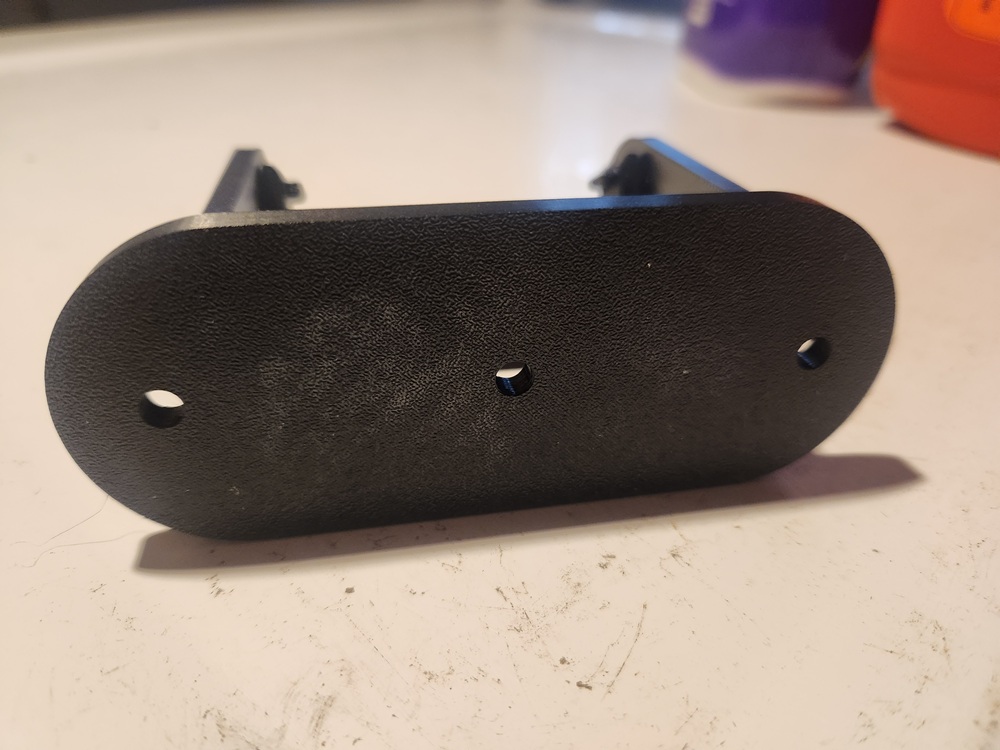
Three screw holes on the base
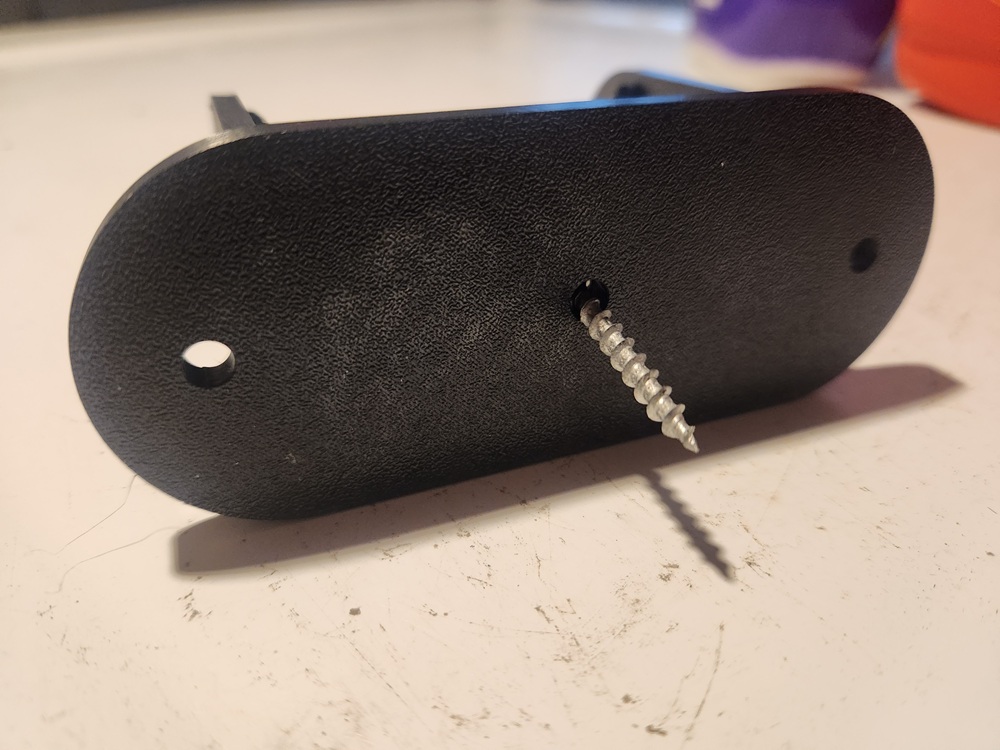
Drywall screw through the center hole
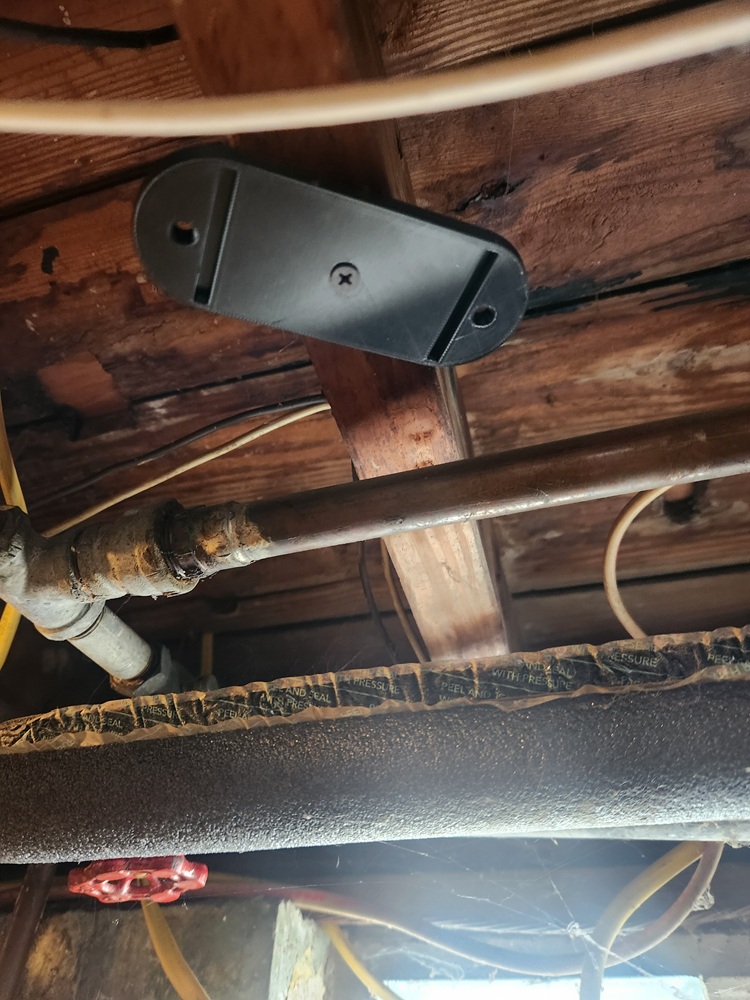
Screwed into the joist
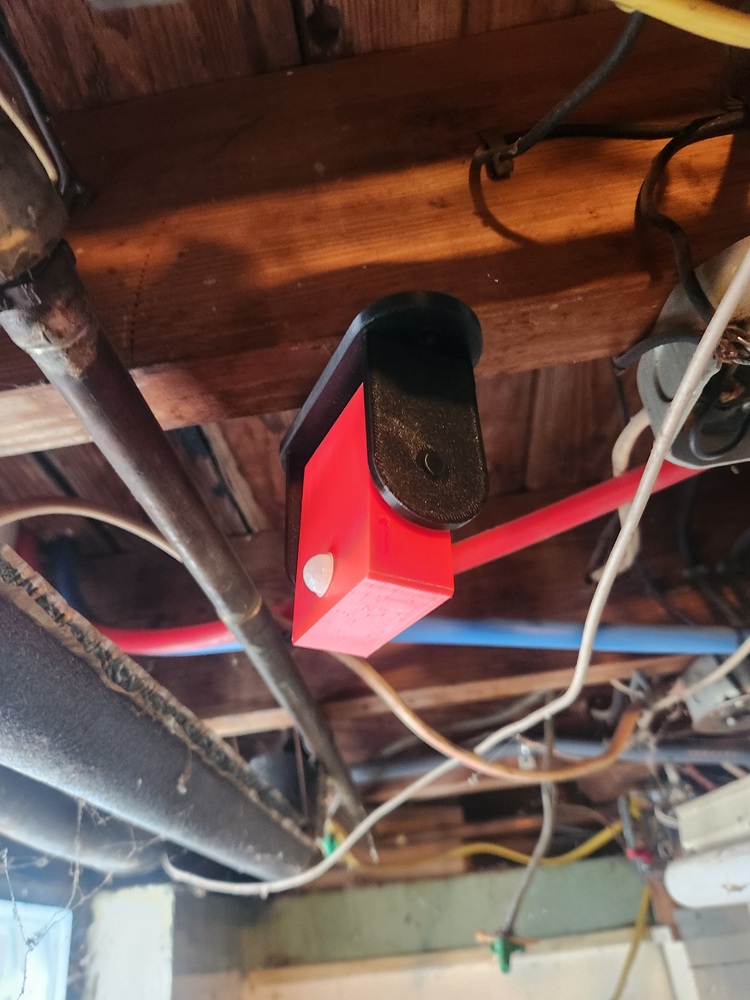
Sensor hangs down, aimed at the action
The View From Above
Mounted to a joist, the sensor looks straight down at the pipes, ledges, and pathways rodents use to get around. It's the vantage point you'd want if you could just stand in the ceiling and watch.
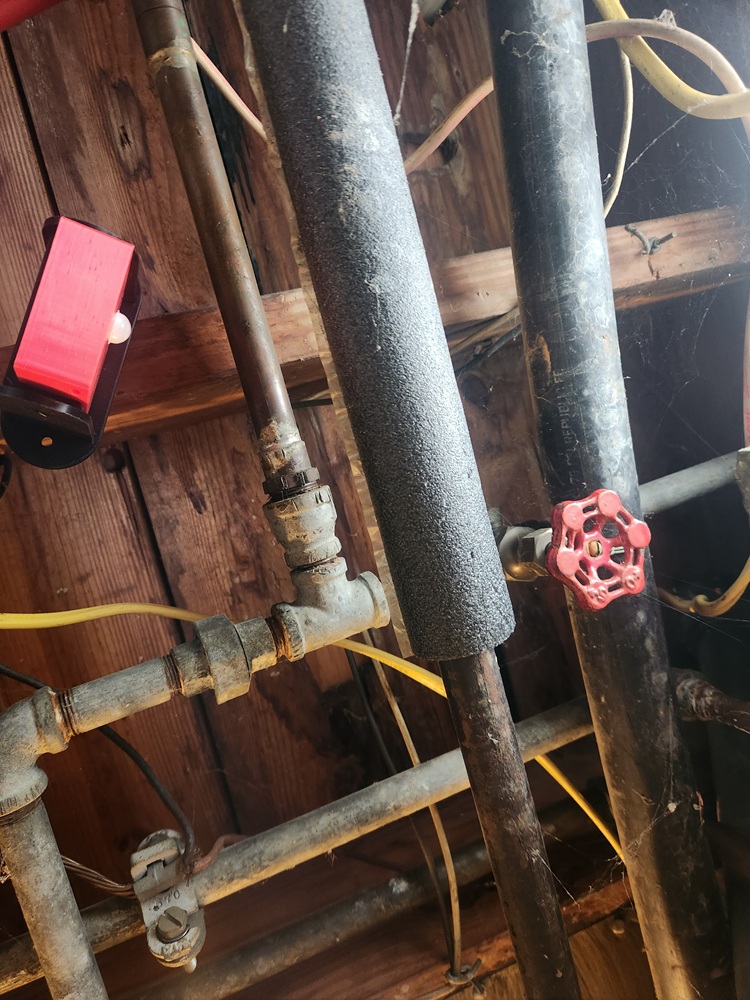
What the joist-mounted sensor sees — looking down at pipes, ledges, and rodent travel routes.
Placement Tips
A few things we've learned from deploying hundreds of sensors
Start at the Edges
Rodents travel along walls and pipes, not through open space. Place sensors near walls, along baseboards, and where pipes enter or exit a room.
Move Toward the Action
After the first couple nights, check playback. If sensors near the garage are triggering but the kitchen sensors aren't, move sensors toward the garage. Follow the data.
Think About the View
The sensor has a detection cone. A sensor on the floor pointed at a wall only sees that wall. Use the TiltMount to aim upward at pipe runs, or hang one from a joist to see everything below.
GripMounts and TiltMounts Included
Every RodentRadar kit ships with mounting accessories so you're ready to place sensors anywhere from day one.
Questions about placement?
(716) 868-9915